 FiddlLink
FiddlLink
FiddlLink
China has become a significant sourcing base for multimode transceiver products used in enterprise networks, data centers, campus systems, and industrial communication. Global buyers now compare more than unit prices. They examine optical reach, connector quality, transmission stability, heat performance, coding compatibility, and supplier support.
Dr. Peter Winzer, a widely respected optical communications expert, has said, “Optical communications is the foundation of modern digital infrastructure.” That observation explains why a multimode transceiver deserves careful evaluation. A small module can influence network uptime, installation time, and future upgrade costs. In practical projects, buyers often inspect product labels, test reports, firmware compatibility, and packaging before approving a shipment. They may also request samples under real operating temperatures. Details matter.
China’s leading suppliers serve common standards, including SR, SR4, and related short-distance applications. Many offer 10G, 25G, 40G, 100G, and higher-speed options. Yet a polished catalog does not always prove dependable performance. That is where this guide needs some caution. Supplier claims can be incomplete, and product availability may change quickly. Buyers should verify technical data independently.
This overview introduces China’s top multimode transceiver suppliers for global buyers. It considers manufacturing experience, quality controls, customization ability, delivery practices, and after-sales responsiveness. It also highlights practical questions about interoperability and lifecycle support. The best choice is not always the cheapest one. Sometimes, the safer module saves more.
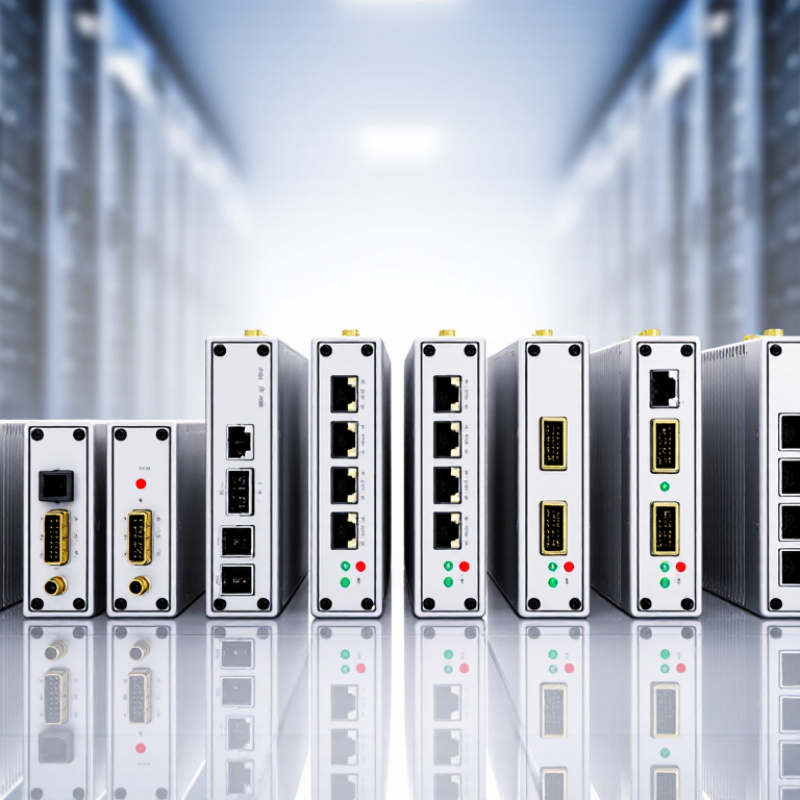
A multimode transceiver is an optical module for sending data through multimode fiber. It converts electrical signals into light and receives them at the other end. Most models operate near 850 nanometers and use short-range fiber links. Data centers, campus networks, and server rooms commonly use this technology. Small device, large consequence.
Multimode solutions matter because they can reduce cabling costs and simplify high-density network design. OM3 and OM4 fiber can support fast connections across practical data-center distances. Yet distance, connector quality, temperature, and fiber type all affect performance. A transceiver may work during testing but fail after installation. That uncomfortable detail deserves attention. Buyers should check optical power, receiver sensitivity, operating temperature, and digital diagnostics before ordering.
For global buyers, reliable sourcing involves more than comparing unit prices. Suppliers should provide clear specifications, traceable test records, compatibility guidance, and consistent quality-control procedures. Ask whether every batch receives temperature, optical-power, and interoperability testing. Packaging also matters when modules cross long shipping routes. In my experience, vague answers often signal future delays, although this is not always true. A capable supplier will explain technical limits without hiding behind impressive speed numbers. Independent sample testing remains sensible, especially for large deployments. Small differences in fiber standards can create expensive troubleshooting later.
| Application / Ethernet Standard | Nominal Data Rate | Typical Operating Wavelength | Compatible Multimode Fiber | Maximum Reach on OM3 | Maximum Reach on OM4 | Common Form Factor | Typical Deployment |
|---|---|---|---|---|---|---|---|
| 1000BASE-SX | 1.25 Gb/s line rate | 850 nm | OM1, OM2, OM3, OM4, OM5 | 550 m | 550 m | SFP | Enterprise access switches, campus networks, and short-reach data links |
| 10GBASE-SR | 10.3125 Gb/s line rate | 850 nm | OM1, OM2, OM3, OM4, OM5 | 300 m | 400 m | SFP+ | Server connections, storage networks, and data-center leaf connections |
| 25GBASE-SR | 25.78125 Gb/s line rate | 850 nm | OM3, OM4, OM5 | 70 m | 100 m | SFP28 | High-density server access and modern data-center networks |
| 40GBASE-SR4 | 41.25 Gb/s line rate | 850 nm | OM3, OM4, OM5 | 100 m | 150 m | QSFP+ | Short-distance switch-to-switch and aggregation links |
| 100GBASE-SR4 | 103.125 Gb/s line rate | 850 nm | OM3, OM4, OM5 | 70 m | 100 m | QSFP28 | Data-center spine-and-leaf connections and high-bandwidth uplinks |
| 100GBASE-SR10 | 103.125 Gb/s line rate | 850 nm | OM3, OM4 | 100 m | 150 m | CFP, CXP, or equivalent multi-lane module | Legacy high-density data-center interconnects using ten optical lanes |
| OM1 Multimode Fiber | Fiber category, not a transceiver speed | Commonly used at 850 nm | 62.5/125 µm graded-index fiber | Distance depends on the Ethernet standard | Not applicable | Compatible with selected short-reach modules | Older building cabling and legacy enterprise installations |
| OM2 Multimode Fiber | Fiber category, not a transceiver speed | Commonly used at 850 nm | 50/125 µm graded-index fiber | Distance depends on the Ethernet standard | Not applicable | Compatible with selected short-reach modules | Legacy campus networks and upgraded horizontal cabling |
| OM3 Multimode Fiber | Fiber category, not a transceiver speed | Commonly used at 850 nm | 50/125 µm laser-optimized fiber | Standard reference for many short-reach applications | Not applicable | SFP+, SFP28, QSFP+, and QSFP28 | Cost-effective data-center and enterprise backbone cabling |
| OM4 Multimode Fiber | Fiber category, not a transceiver speed | Commonly used at 850 nm | 50/125 µm enhanced laser-optimized fiber | Usually provides greater reach than OM3 | Not applicable | SFP+, SFP28, QSFP+, and QSFP28 | Higher-density data centers requiring extended short-reach distances |
| OM5 Multimode Fiber | Fiber category, not a transceiver speed | 850 nm and selected short-wave wavelengths | 50/125 µm wideband multimode fiber | Application-dependent | Application-dependent | Short-reach multi-lane optical modules | Emerging wavelength-division multiplexing and high-density cabling designs |
| Supplier Qualification Criteria | Key purchasing dimension | Verify the specified wavelength and optical budget | Confirm OM1, OM2, OM3, OM4, or OM5 compatibility | Request standards-based reach data | Request standards-based reach data | Confirm SFP, SFP+, SFP28, QSFP+, or QSFP28 compatibility | Check coding, digital diagnostics, operating temperature, testing records, and warranty terms |
It is a small optical module for sending data through multimode fiber.
They are common in data centers, campus networks, and server rooms.
They can reduce cabling costs and simplify high-density network layouts.
Confirm the fiber type, wavelength, connector, data rate, and transmission distance.
Dust, tight fiber bends, poor polarity, and unsuitable fiber can cause failures.
Request business registration, export records, factory details, and responsible contact information.
Yes, request samples and test them with the actual switches, cables, and patch panels.
Confirm warranty coverage, replacement procedures, lead times, packaging standards, and inspection rights.
This guide explains what a multimode transceiver is and why it is important for modern fiber-optic networks. Designed for short- to medium-distance data transmission, multimode transceivers support efficient communication across data centers, enterprise networks, campuses, and industrial systems. The article also introduces key technical standards, including optical wavelength, transmission distance, connector type, data rate, fiber compatibility, and operating temperature, helping buyers understand how product specifications affect network performance and reliability.
It further outlines how to evaluate China-based suppliers by reviewing manufacturing capabilities, quality-control procedures, testing systems, customization services, documentation, and supply stability. Global buyers can compare supplier experience, verify technical compliance through samples and test reports, assess communication and after-sales support, and confirm packaging and delivery requirements before placing an order. With a structured evaluation process, buyers can select a dependable supplier that offers compatible, cost-effective, and consistent multimode transceiver solutions for international network applications.
