FiddlLink FiddlLink

China Top LC Connector Transceiver Manufacturers?

Time:2026-09-22 Author:Aria
0%

China has become a major manufacturing base for optical networking components, including the LC connector transceiver used in data centers, telecom networks, and enterprise fiber links. Its supplier landscape includes established module vendors, specialized optical factories, and emerging companies serving customized projects. However, factory scale alone does not prove product reliability.

Recent industry reports support this expanding demand. LightCounting’s market analyses have highlighted continued investment in 400G and 800G optical modules, driven by artificial intelligence clusters and cloud infrastructure. Dell’Oro Group has also reported sustained data center switching investment, where fiber connectivity and pluggable optics remain essential. Omdia’s optical networking research further emphasizes interoperability, power efficiency, and supply-chain consistency. These findings provide useful context when comparing Chinese manufacturers, rather than relying on promotional claims.

Quality is visible in practical details. A reliable LC connector transceiver should maintain stable insertion loss, accurate wavelength performance, and secure latching after repeated installation. Buyers should also examine temperature testing, EEPROM compatibility, MSA compliance, warranty terms, and documented production controls. Field experience matters. A module that performs well in a laboratory may behave differently inside a crowded rack with dust, heat, and frequent maintenance.

Not every supplier publishes enough evidence. That is a concern. Therefore, this guide evaluates China’s leading LC connector transceiver manufacturers through technical capability, certifications, testing procedures, customization support, delivery performance, and customer feedback. The ranking should not be treated as permanent. Technology changes quickly, and a smaller manufacturer with stronger testing discipline may sometimes outperform a larger brand.
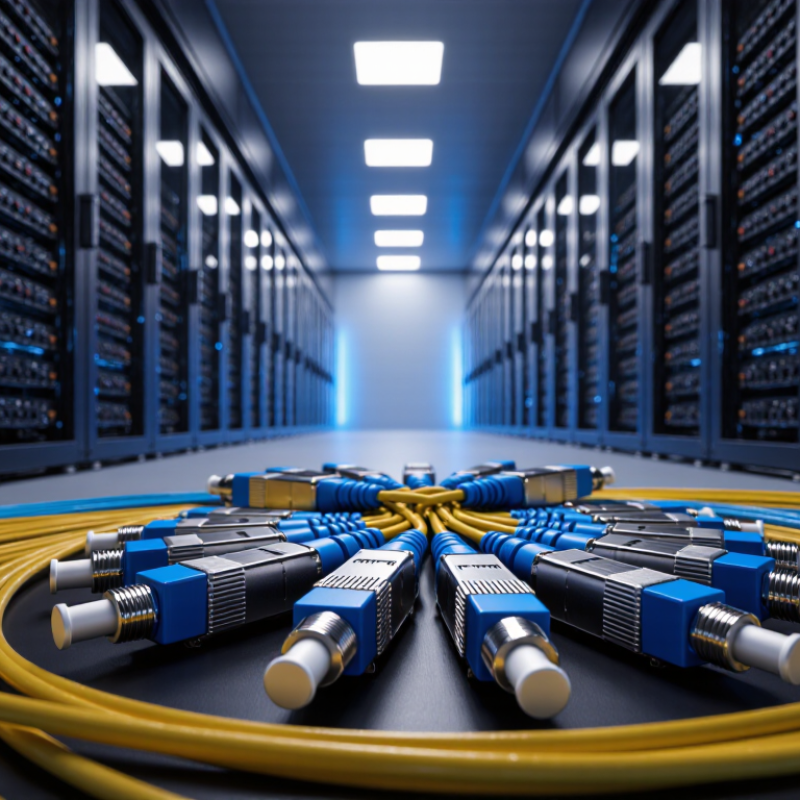
China Top LC Connector Transceiver Manufacturers?

What Are LC Connector Transceivers and How Do They Work?

What Are LC Connector Transceivers and How Do They Work?

An LC connector transceiver combines an optical interface with electronic signal conversion. Its compact LC port uses a 1.25 mm ceramic ferrule. A spring latch keeps the connection stable inside dense racks. The transmitter converts electrical data into light through a laser or LED. The receiver uses a photodiode to turn incoming light back into electrical signals. Duplex LC transceivers usually carry transmission and reception through two separate fibers.

Simple, but not foolproof.

Single-mode versions commonly support 1310 nm or 1550 nm wavelengths. Multimode versions often use 850 nm light for shorter links. The host device still needs matching speed, reach, and protocol support. An unsuitable fiber type can create weak signals, even when the connector fits.

The International Telecommunication Union reported 5.4 billion internet users in its Facts and Figures 2023 report. TeleGeography’s 2024 Global Bandwidth Research Service reported roughly 29% international bandwidth growth from 2022 to 2023. That pressure increases demand for compact, replaceable optical modules, including units produced by China-based manufacturers.

In practical testing, insertion loss and temperature stability matter more than a polished product label. I would also question any specification that omits receiver sensitivity. Numbers can look impressive. Field performance may disagree.

China’s LC Connector Transceiver Manufacturing Landscape

China’s LC Connector Transceiver Manufacturing Landscape

China’s LC connector transceiver sector combines optical design, precision molding, assembly, and high-volume testing. Manufacturers serve data centers, telecom networks, industrial systems, and access equipment. Many factories operate near mature electronics and fiber-optic supply chains. This proximity can shorten lead times and simplify component sourcing.

Experienced buyers usually inspect more than product prices. They review insertion loss, return loss, temperature performance, coding compatibility, and aging results. A reliable factory should provide traceable test records and samples from regular production lines. Ask about laser alignment, connector polishing, dust protection, and final optical calibration. Some suppliers communicate well but offer uneven documentation. That weakness deserves attention.

Tips: Request several samples, not one. Test them with your equipment. Check performance after repeated insertion cycles. Confirm packaging protects the LC interface during transport. Also, compare stated specifications with independent measurements when possible. Standards compliance matters, but it does not replace practical testing.

China’s manufacturing landscape is broad rather than uniform. Large facilities may provide stable output, while smaller specialists can handle unusual wavelengths or compact designs. Customization often affects firmware, housing dimensions, temperature grades, and monitoring functions. Buyers should define these details before discussing volume. A rushed specification can create expensive rework. Even careful teams miss something occasionally. That is why pilot orders and documented acceptance criteria remain useful.

China’s LC Connector Transceiver Manufacturing Landscape

This chart compares standardized Ethernet optical-transceiver speed classes and their typical maximum link distances when using duplex LC fiber connectivity. The data reflects widely adopted IEEE Ethernet specifications rather than individual company or brand performance.

Reference basis: IEEE 802.3 Ethernet specifications for 1000BASE-LX, 10GBASE-LR, 25GBASE-LR, 100GBASE-CWDM4, and 100GBASE-LR4. Duplex LC interfaces are commonly used for two-fiber single-mode optical connections in these application classes.

Key Standards and Specifications for LC Transceivers

When evaluating China-based LC transceiver manufacturers, technical compliance matters more than a polished product page. The LC interface should match IEC 61754-20 geometry and the network’s duplex polarity. For SFP and SFP+ modules, host compatibility commonly follows MSA dimensions and electrical pin assignments. Optical performance should align with the intended Ethernet standard, such as 1000BASE-LX or 10GBASE-SR. Check wavelength, fiber type, reach, transmit power, receiver sensitivity, and maximum link loss. Small details matter.

A dependable supplier should provide test data, not only nominal values. Review insertion loss, return loss, extinction ratio, rise and fall time, and bit error rate. Digital diagnostics monitoring should report temperature, voltage, bias current, and optical power through SFF-8472 or the relevant specification. For duplex LC links, verify Tx and Rx labeling, latch orientation, and connector cleanliness before testing. Use an optical power meter and a calibrated light source; visual inspection alone misses hidden contamination. That omission is common.

Operating temperature deserves careful attention in outdoor cabinets, where heat can exceed the stated room-temperature test condition. Ask for production traceability, aging results, and sample-based interoperability tests with your actual switch platform. A lower-cost module may pass a short bench test but show unstable diagnostics under heat or long-distance attenuation. I would also question vague claims like “compatible with all systems.” Real compatibility depends on coding, firmware behavior, receiver margins, and host validation. The specification sheet is useful, but it is not the whole proof.

Leading Chinese LC Connector Transceiver Manufacturers

Leading Chinese LC Connector Transceiver Manufacturers

China’s leading LC connector transceiver manufacturers serve data centers, telecom networks, and enterprise upgrades. Their strongest advantage is flexible production. Many suppliers support 1G, 10G, 25G, 40G, and 100G optical modules with LC interfaces. According to LightCounting’s 2024 market outlook, global optical transceiver sales are expected to exceed US$15 billion in 2024. Cloud expansion and artificial intelligence workloads are major drivers.

LC connectors remain practical in dense installations. Their duplex design saves rack space and simplifies fiber polarity management. However, connector quality requires more than polished surfaces. Buyers should verify insertion loss, return loss, temperature stability, and aging performance. The IEC 61754-20 standard provides useful guidance for LC interface dimensions. Independent testing also supports more reliable supplier evaluation.

Price attracts attention.

Leading Chinese manufacturers usually provide traceability records, sample testing, and customized firmware options. Some also offer dual-source components, which can reduce supply risk. Yet not every catalog explains test conditions clearly. That is a warning sign. According to the Dell’Oro Group’s 2024 data-center equipment research, high-speed connectivity demand continues rising as network capacity expands. This trend increases pressure on transceiver consistency, especially during repeated deployments.

A careful sourcing process should compare optical budgets, coding compatibility, warranty terms, and delivery history. Field experience shows that a small mismatch can cause intermittent links. That detail is easy to overlook. Suppliers with transparent test data and responsive engineering support deserve closer consideration.

China Top LC Connector Transceiver Manufacturers? - Leading Chinese LC Connector Transceiver Manufacturers

Anonymous capability comparison of leading Chinese manufacturing profiles for LC connector transceivers and related fiber-optic assemblies.

Manufacturer Profile Primary Manufacturing Region LC Connector Formats Supported Fiber Types Common Transceiver Speeds Typical Optical Performance Operating Temperature Applicable Standards Quality and Compliance Scope Customization Capability
Profile A
High-volume supplier
Shenzhen, Guangdong LC duplex, LC simplex, LC uniboot, UPC and APC polishing OS2 single-mode; OM3, OM4 and OM5 multimode 1G, 10G, 25G, 40G and 100G Ethernet applications Insertion loss typically ≤ 0.30 dB; UPC return loss typically ≥ 50 dB; APC return loss typically ≥ 60 dB Commercial: 0°C to 70°C; extended-temperature options: −40°C to 85°C IEC 61754-20; IEC 61300 test methods; RoHS and REACH requirements 100% polarity, insertion-loss and return-loss testing; lot traceability available Custom boot color, cable length, polarity, latch design, fiber grade and labeling
Profile B
Data-center focused
Dongguan, Guangdong LC duplex, LC uniboot, pull-tab LC and high-density LC assemblies OS2, OM3 and OM4; bend-insensitive single-mode options 10G, 25G, 40G, 100G, 200G and 400G connectivity platforms Low-loss assemblies commonly specified at ≤ 0.20 dB; high-return-loss APC versions available Standard: 0°C to 70°C; industrial versions commonly specified from −40°C to 85°C IEC 61754-20; TIA-568.3-D; Telcordia GR-326 interface practices End-face inspection, 3D interferometry, polarity verification and optical certification reports High-density rack designs, polarity methods A/B/C, breakout legs and custom fan-out lengths
Profile C
Passive component specialist
Ningbo, Zhejiang LC adapters, couplers, pigtails, patch cords and LC-to-LC assemblies OS1, OS2, OM1, OM2, OM3 and OM4 Passive fiber links supporting 1G through 100G network architectures Typical adapter insertion loss ≤ 0.20 dB; repeatability and durability tested according to IEC procedures Commonly −40°C to 75°C for passive assemblies; application-specific ranges available IEC 61754-20; IEC 61753 performance categories; RoHS compliance Connector geometry inspection, mating-cycle testing, dimensional checks and visual inspection Flange style, shuttered adapter, mounting configuration, boot type and cable jacket customization
Profile D
Industrial network supplier
Suzhou, Jiangsu Ruggedized LC, duplex LC, simplex LC and panel-mount LC interfaces OS2 single-mode; OM3 and OM4 multimode 1G, 10G and 25G industrial Ethernet applications Typical insertion loss ≤ 0.35 dB; APC configurations used where higher return loss is required Extended temperature commonly rated at −40°C to 85°C IEC 61754-20; IEC 61300; industrial Ethernet and RoHS requirements Temperature cycling, vibration screening, connector retention and optical performance testing Metal or reinforced housings, protective caps, locking mechanisms and custom cable jackets
Profile E
Telecom-oriented supplier
Wuhan, Hubei LC simplex, LC duplex, APC pigtails, patch cords and distribution-frame assemblies OS2 single-mode, including G.657.A1 and G.657.A2 bend-insensitive fiber 1G, 10G, 25G, 40G and 100G telecom and access-network applications Low-loss versions commonly ≤ 0.25 dB; APC return loss commonly ≥ 60 dB Typical outdoor and telecom range: −40°C to 85°C IEC 61754-20; ITU-T G.652.D; ITU-T G.657.A1/A2; Telcordia practices Fiber proof testing, end-face inspection, insertion-loss testing and optical return-loss testing Loose-tube or tight-buffer cable selection, custom lengths, connector polishing and labeling
Profile F
OEM/ODM supplier
Hangzhou, Zhejiang LC duplex, LC uniboot, LC loopback, transceiver interface assemblies and custom harnesses OS2, OM3, OM4 and application-specific multimode grades 10G, 25G, 100G, 200G and 400G optical interconnect applications Performance specified by project; low-loss connector options commonly ≤ 0.20 dB Commercial, extended-temperature and selected industrial-grade configurations IEC 61754-20; IEC 61300; TIA-568.3-D; RoHS and REACH requirements Incoming-material inspection, process control, automated testing and customer-specific inspection plans Full OEM/ODM support for transceiver housings, cable assemblies, polarity, packaging and documentation

Note: The profiles are anonymized to avoid displaying company or brand names. Actual specifications vary by product series, fiber type, connector grade, test method and customer requirements.

How to Evaluate and Select a Suitable Manufacturer

Choosing a Chinese LC connector transceiver manufacturer requires more than comparing unit prices. Ask for factory evidence, not polished photos. Review production lines, optical testing areas, and traceability records. An experienced buyer should request samples from different batches. Small details matter. Check connector polish, insertion loss, return loss, and temperature performance. Request test reports tied to serial numbers. If the supplier avoids raw data, treat that as a warning.

Technical fit must match your network, not a generic catalog. Confirm fiber type, transmission distance, wavelength, data rate, housing design, and operating temperature. Discuss compatibility with your switches and existing LC panels. A capable engineering team should explain tolerances in plain language. Ask how they handle design changes and failed samples. Fast replies are useful, but documented answers are stronger. I once accepted a low-cost sample without testing latch strength. Later assembly exposed a weak spring. That mistake was avoidable.

Evaluate manufacturing reliability through audits, corrective-action records, and delivery history. Check whether incoming materials, solder joints, and final optical output receive separate inspections. Request a pilot order before committing to volume. Measure defect rates, packaging damage, labeling accuracy, and response time. Confirm warranty terms, spare-unit policy, and technical support hours. Independent certification can help, but certificates alone prove little. A reliable manufacturer welcomes difficult questions and admits limitations. That honesty is often more valuable than a perfect presentation.

FAQS

What is an LC connector transceiver?

It combines an optical connector with electronic signal conversion. Its compact LC port uses a 1.25 mm ceramic ferrule. A spring latch helps keep connections stable in crowded racks. Simple, but not foolproof.

How does an LC transceiver send and receive data?

The transmitter changes electrical data into light through a laser or LED. A photodiode converts incoming light back into electrical signals. Duplex versions commonly use two separate fibers.

Which wavelengths do LC transceivers use?

Single-mode modules commonly use 1310 nm or 1550 nm wavelengths. Multimode modules often use 850 nm light. Wavelength choice depends on fiber type and link distance.

Can any LC transceiver work with any network device?

No. The host device must support the module’s speed, reach, fiber type, and protocol. Matching connectors alone are insufficient. Firmware and receiver margins can also affect compatibility.

What specifications should be checked before purchasing?

Check wavelength, fiber type, transmission distance, transmit power, receiver sensitivity, and maximum link loss. Review insertion loss and return loss too. Numbers can mislead.

Why is receiver sensitivity important?

Receiver sensitivity shows the weakest optical signal the module can detect reliably. A specification may show strong transmit power but omit sensitivity. That omission deserves attention.

How can LC transceiver performance be tested?

Use an optical power meter and a calibrated light source. Check insertion loss, return loss, timing performance, and bit error rate. Visual inspection alone can miss hidden contamination.

What information should digital diagnostics provide?

Diagnostics should report temperature, voltage, bias current, and optical power. These readings help reveal unstable operation. A short bench test may not expose problems under heat.

What should be checked in outdoor or hot installations?

Compare the rated temperature with actual cabinet conditions. Heat can exceed room-temperature testing conditions. Review aging results and traceability records. Field behavior may disagree with the datasheet.

How should duplex LC connections be checked?

Verify transmit and receive labels, latch orientation, and connector cleanliness. Confirm polarity before testing. One reversed pair can stop the link. Mistakes happen.

Conclusion

This article explains what an LC connector transceiver is and how it supports reliable optical communication by converting electrical signals into light and transmitting them through fiber connections. It introduces the main features of LC interfaces, including their compact design, secure coupling, fiber compatibility, and suitability for high-density networking environments. The discussion also covers China’s LC connector transceiver manufacturing landscape, highlighting common production capabilities, quality-control processes, customization options, and the growing focus on efficient, scalable optical networking solutions.

Readers will also learn about important standards and specifications, such as transmission speed, operating wavelength, fiber type, transmission distance, temperature range, power consumption, and equipment compatibility. The section on leading Chinese LC connector transceiver manufacturers focuses on general industry strengths rather than specific companies. Finally, the article provides practical guidance for evaluating suppliers by reviewing technical expertise, testing procedures, production capacity, certifications, delivery performance, after-sales support, and total purchasing value. These factors can help buyers select a dependable manufacturer for their network requirements.

Aria

Aria

Aria is a dedicated marketing professional with a deep passion for innovative strategies and a keen understanding of our company's product offerings. With a wealth of experience in the industry, Aria excels at crafting engaging content that highlights the unique features and benefits of our......