FiddlLink FiddlLink

Top 10 10G SFP+ Transceivers for Global Buyers

Time:2026-10-02 Author:Ethan
0%

Choosing the right 10G SFP+ transceiver can feel simple until a network installation begins. Connector type, fiber distance, wavelength, coding, and switch compatibility all matter. A module that works perfectly in a laboratory may fail during a busy office deployment. Small details become expensive problems.

This guide reviews the top 10 10G SFP+ transceivers for global buyers. It considers optical performance, operating temperature, power use, digital diagnostics, and supplier support. Each product should be assessed against real network conditions, not only its advertised speed. Single-mode modules may suit long-distance links, while multimode options often reduce costs inside data centers. Buyers should also verify standards such as SFP+ MSA, IEEE compatibility, and the equipment manufacturer’s approved coding requirements.

Testing experience shows that reliable performance depends on more than the transceiver itself. Clean connectors, correct fiber polarity, stable ventilation, and accurate distance planning are equally important. A reputable supplier should provide test records, serial-number traceability, warranty terms, and responsive technical assistance. These details help purchasing teams reduce replacement risks across different countries and network environments.

No ranking fits every deployment. That is worth admitting. Prices, inventory, regional certifications, and firmware behavior can change. Some recommendations may need reconsideration after field testing. Therefore, this selection balances measurable specifications with practical evidence from installation, troubleshooting, and long-term operation. The goal is not to promote the most expensive module. It is to identify dependable choices for buyers who need predictable 10Gbps connectivity.
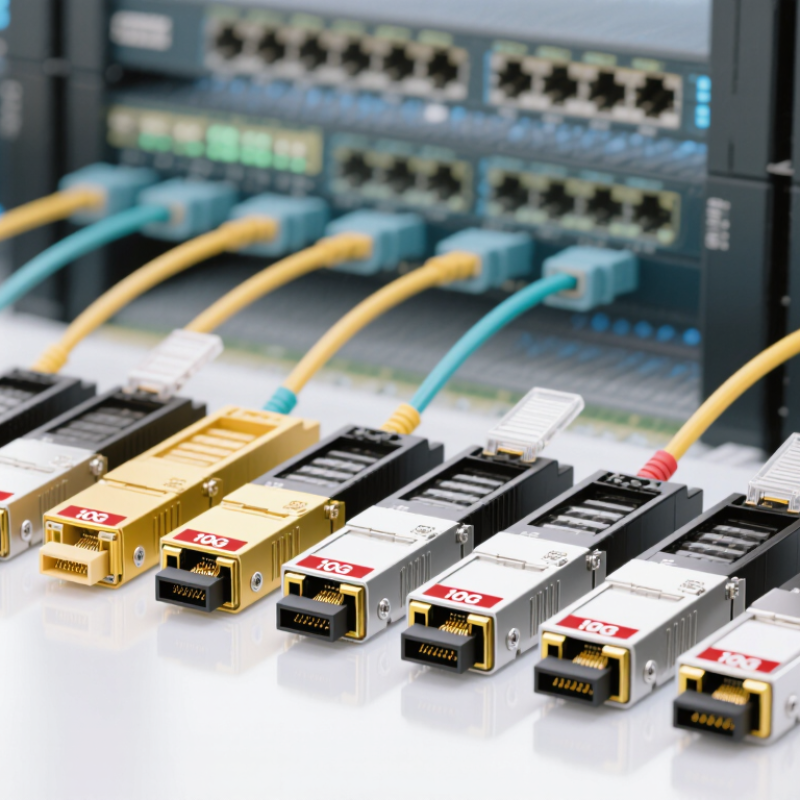
Top 10 10G SFP+ Transceivers for Global Buyers

10G SFP+ Transceivers: Definition, Standards, and Core Functions

10G SFP+ transceivers are compact, pluggable modules that connect network equipment through fiber or copper. They support data rates around 10 gigabits per second, making them common in servers, switches, storage systems, and data centers. The module usually uses an SFP+ cage and a duplex LC connector for optical links.

Standards determine whether a transceiver fits a real network. IEEE 802.3ae defines major 10GbE applications, including 10GBASE-SR for short multimode fiber and 10GBASE-LR for longer single-mode links. Some modules support 10GBASE-ER for extended distances. SFF-8431 and related MSA documents describe electrical, mechanical, and management requirements. Compatibility still requires careful checking. A matching speed label is not enough.

Optical details matter during installation. An SR module commonly uses 850 nm light, while LR modules often use 1310 nm. Fiber type, transmission distance, connector cleanliness, and loss budget can affect stability. Copper direct-attach cables may reduce cost across a rack, but they offer less distance and flexibility.

Digital diagnostics can report temperature, voltage, bias current, and optical power. I have seen teams overlook these readings until intermittent errors appeared. That mistake is easy to repeat. A reliable selection process checks equipment support, firmware behavior, operating temperature, wavelength, and actual link distance before purchase. Signal testing should follow installation, not assumption.

Key Specifications for Comparing 10G SFP+ Transceivers

When comparing 10G SFP+ transceivers, start with the optical standard, not the advertised price. A 10.3125 Gb/s data rate supports common 10GbE links, while wavelength and fiber type determine reach. An 850 nm module usually fits multimode fiber for short data-center connections. A 1310 nm module can support longer single-mode links, often from 10 km to 40 km. Check the exact distance rating. It is not universal.

Connector type matters in a crowded rack. Duplex LC connectors are widely used, but the installed patch panel may require a different arrangement. Review transmit power, receiver sensitivity, and optical budget together. A high transmit value cannot compensate for poor fiber quality. Digital diagnostic monitoring can report temperature, voltage, bias current, and optical power during operation. Useful data.

In practical testing, I also check power consumption and operating temperature. A module drawing below 1.5 W may reduce rack heat, but efficiency figures need verification under load. Industrial-temperature options can suit exposed cabinets, while standard-temperature units may be adequate in controlled rooms. Confirm EEPROM coding and host compatibility before ordering. A transceiver can meet every optical specification and still fail to initialize. That happened in one deployment. The comparison sheet looked complete, but firmware support was missing. Buyers should request test records, compliance declarations, warranty terms, and clear interoperability procedures.

Top 10 10G SFP+ Transceivers for Global Buyers

Top 10 10G SFP+ Transceivers for Global Buyers

Choosing among the top 10 10G SFP+ transceivers requires more than comparing prices. Buyers should verify 10GBASE-SR, LR, ER, and copper compatibility. The IEEE 802.3ae standard defines 10GbE performance requirements, but implementation details still vary. Check wavelength, connector type, operating temperature, and digital monitoring support. Small differences matter in crowded racks.

Cisco’s Annual Internet Report projected 29.3 billion connected devices by 2023, increasing pressure on reliable access networks. This helps explain why 10G optics remain practical for campuses, storage links, and regional data centers. Industry reports from LightCounting also show strong demand for Ethernet optical modules, even as higher-speed deployments expand. A sensible top-ten comparison should include multimode modules for short links and single-mode modules for distances from several kilometers to extended metropolitan runs. It should also examine measured receiver sensitivity and typical power consumption.

Field experience exposes the difficult part. A module may pass a bench test but fail after temperature changes or poor fiber cleaning. Test interoperability with the intended switch, especially when coding restrictions exist. DOM readings can reveal rising temperature or transmit power before an outage occurs. Vendor documentation, third-party test records, warranty terms, and regional compliance statements improve purchasing confidence. I would not rank one module highest without site data. That judgment can be wrong. Total cost also includes patch cords, cleaning tools, spares, and replacement time.

Top 10 10G SFP+ Transceiver Options for Global Buyers

The chart compares representative maximum link distances for widely used 10G optical and copper connectivity options. Optical reach depends on fiber type, wavelength, link budget, connectors, and operating conditions.

Reference basis: IEEE 802.3 Ethernet specifications and commonly deployed MSA-compliant module configurations. CWDM, DWDM, and BiDi distances vary by optic configuration.

Compatibility, Fiber Types, Reach, and Network Applications

Top 10 10G SFP+ Transceivers for Global Buyers

Choosing among the top 10 10G SFP+ transceivers requires more than comparing prices. Compatibility is the first filter. Confirm the switch port, firmware requirements, and optical interface before ordering. A module may fit physically but fail during link negotiation. I have seen this mistake delay a small data center upgrade by several days. Vendor coding also matters, although compatibility lists are not always complete.

Fiber type directly affects reach and installation cost. Multimode OM3 fiber commonly supports short links near 300 meters, while OM4 can extend typical 10G connections farther. Single-mode OS2 fiber is better for campus, metropolitan, and data center interconnects. Short-reach modules suit server racks. Long-reach versions may support 10 kilometers or more, depending on the optical specification. Always check the actual distance budget.

Network application should guide the ranking. Use low-power short-reach optics for dense switch-to-server connections. Choose longer-reach modules for building links, remote cabinets, or carrier handoffs. Digital diagnostics can reveal temperature, voltage, and optical power before failure. That feature is valuable, but readings still need trained interpretation. A top-ten list can simplify purchasing, yet it may hide regional certification, connector cleanliness, and stocking differences. Test a sample link under real cable conditions before placing a large global order.

Pricing, Compliance, Warranty, and International Purchasing Factors

Top 10 10G SFP+ Transceivers for Global Buyers

A strong 10G SFP+ shortlist should compare more than unit price. Compare the landed cost. Include freight, duties, testing, replacement stock, and local taxes. Request compatibility with IEEE 802.3ae and the relevant SFP+ MSA. Suppliers should provide wavelength, reach, temperature range, power consumption, and digital diagnostics. A low quote can look brilliant, then disappoint.

Compliance varies by destination. Ask for RoHS and REACH declarations, laser safety evidence under IEC 60825-1, and clear customs documentation. The UNCTAD Review of Maritime Transport 2024 states that ships carry over 80% of global merchandise trade. Delays remain possible. Therefore, confirm export packaging, insurance, harmonized codes, and delivery responsibility before payment. Uptime Institute’s 2024 Global Data Center Survey reported an average PUE of 1.56. Lower-power optics may help at scale, although the savings are often overstated.

Tips: Require a sample test before bulk purchasing. Check DOM readings at both ends. Keep the serial-number list. Confirm whether the warranty covers advance replacement, cross-border freight, and labor. A serious supplier should explain its RMA process in writing. Three-year coverage is useful, but response time matters more. I still find this easy to underestimate. Ask for a lot-specific test report, not a generic certificate. Also verify whether firmware, coding, and support remain available after the sale.

FAQS

What should buyers check before ordering a 10G SFP+ transceiver?

Confirm the switch port, firmware, optical interface, and coding requirements. Physical fit does not guarantee link negotiation. Test one sample first.

How does fiber type affect connection distance?

Multimode OM3 commonly supports links near 300 meters. OM4 can reach farther in typical 10G installations. OS2 single-mode fiber suits campus and metropolitan links.

Which transceiver suits a server rack?

Choose a low-power, short-reach module for dense switch-to-server connections. It reduces heat and power use. Short links are simpler.

When is a long-reach module necessary?

Use one for remote cabinets, building links, or interconnects. Some versions support 10 kilometers or more. Check the real distance budget carefully.

What information should suppliers provide?

Request wavelength, reach, temperature range, power consumption, and diagnostic details. Compatibility with applicable technical standards also matters. Generic specifications are not enough.

Why are digital diagnostics useful?

Diagnostics can show temperature, voltage, and optical power. These readings may reveal problems before failure. Interpretation still requires trained staff.

How should buyers calculate the total purchase cost?

Include freight, duties, testing, replacement stock, local taxes, and possible labor. A low unit price can become expensive later. I sometimes underestimate this.

Which compliance documents should international buyers request?

Ask for material declarations, laser safety evidence, customs documents, and clear export packaging details. Confirm insurance, delivery responsibility, and harmonized codes before payment.

What should a bulk-order test include?

Test both ends with real cables and inspect connector cleanliness. Record diagnostic readings and serial numbers. Keep the test report.

What warranty details deserve attention?

Confirm advance replacement, cross-border freight, labor coverage, and response time. Three years sounds reassuring. Fast support may matter more.

Conclusion

This guide introduces the 10G SFP+ transceiver, a compact optical module designed to support high-speed 10 Gigabit Ethernet connections in data centers, enterprise networks, telecommunications systems, and other demanding environments. It explains common standards, core functions, and the specifications that matter most when comparing products, including wavelength, transmission distance, fiber type, connector design, operating temperature, power consumption, and digital monitoring capabilities. These factors help buyers select solutions that match their network architecture and performance requirements.

The article also presents a practical selection of the top 10G SFP+ transceivers for global buyers, covering options for short-, medium-, and long-distance links as well as multimode and single-mode fiber applications. It highlights compatibility with network equipment, deployment scenarios, pricing considerations, compliance documentation, warranty coverage, supply stability, and international purchasing requirements. By evaluating technical performance, total cost, reliability, and after-sales support together, organizations can make informed decisions and build scalable, efficient, and dependable 10Gbps networks.

Ethan

Ethan

Ethan is a seasoned marketing professional with a deep expertise in our company's innovative product line. With a passion for sharing knowledge and insights, he takes the lead in regularly updating our corporate blog, where he explores industry trends, product features, and effective marketing......