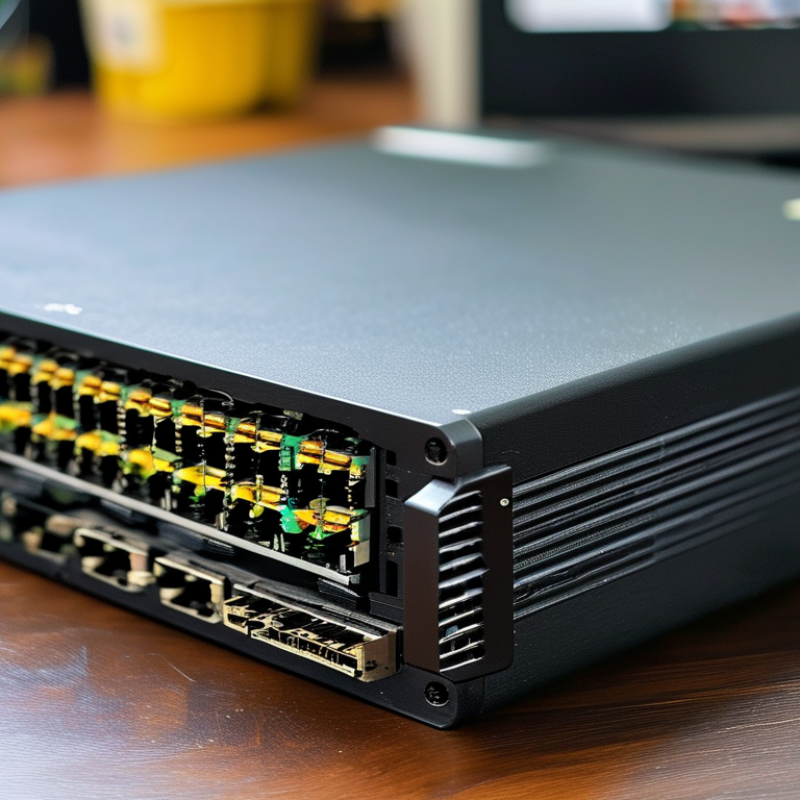
The demand for high-speed data transmission continues to grow. Networks require faster and more efficient solutions. The 400G optical transceiver emerges as a vital technology in this landscape.
This device supports data rates of up to 400 Gbps. It enables high-capacity connectivity for cloud services and data centers. Using advanced modulation techniques, the 400G optical transceiver ensures significant improvements in data transfer efficiency. Its compact design allows for easier integration into existing networks.
Yet, challenges remain in optimizing performance and reducing costs. Manufacturers must address heat dissipation and signal integrity. Ongoing research aims to enhance the reliability of 400G optical transceivers. Balancing innovation with practicality can drive future success in optical networking.
What is a 400G Optical Transceiver and Its Key Features
A 400G optical transceiver is a high-speed device used in data networks. Its main function is to transmit and receive data over optical fibers at a rate of 400 gigabits per second. This substantial speed enables it to support a variety of applications, including cloud computing, data center communications, and high-frequency trading. Understanding its key features is essential for network engineers and IT professionals.
One critical aspect of a 400G optical transceiver is its ability to integrate multiple modulation formats. This includes PAM4, which allows for higher data rates without needing additional bandwidth. According to a report by the International Telecommunication Union, the demand for 400G technology is expected to grow by over 30% annually. Such growth highlights its importance in managing increased data traffic across networks.
Tips: When selecting a 400G transceiver, consider factors like power consumption and compatibility with existing systems. Not all transceivers are created equal; some may not meet operational needs. Regularly review your technology choices to ensure they align with new developments in the industry. The landscape is ever-evolving, and what works today may change tomorrow.
Understanding the Technology Behind 400G Optical Transceivers
400G optical transceivers represent a significant leap in data transmission technology. They are essential for meeting the growing demand for bandwidth in today's networks. According to industry reports, global data traffic is projected to reach over 175 zettabytes by 2025. This surge drives the need for efficient optical transceivers, especially in data centers and telecommunication networks.
The core technology behind 400G optical transceivers relies on advanced modulation formats and multiplexing techniques. Many transceivers use coherent detection combined with dense wavelength division multiplexing (DWDM). This allows multiple data signals to be transmitted concurrently over the same optical fiber. For example, technologies like PAM4 (Pulse Amplitude Modulation with four levels) are becoming more prevalent. They boost data rates while maintaining spectral efficiency. However, the adoption of these technologies can present challenges, such as increased power consumption and complexity in signal processing.
Furthermore, the reliability of 400G optical transceivers must be consistently evaluated. Reports indicate that while these devices can support long-distance transmissions, they can be susceptible to temperature variations and physical stress. Engineers must carefully consider these factors in design and deployment. As networks evolve, so does the conversation around optimizing transceiver performance while ensuring operational resilience.
Comparison of 400G Optical Transceivers to Previous Generations
400G optical transceivers represent a significant leap in data transmission technology. Comparing them to previous generations, such as 100G or 200G transceivers, highlights notable differences. The 400G variants utilize advanced modulation techniques, like PAM4, to achieve higher data rates over a single wavelength. This improvement provides faster connections and enhances bandwidth efficiency.
While 100G transceivers primarily use NRZ (Non-Return-to-Zero) signaling, which is limited in speed, the shift to PAM4 in 400G models allows for double the data transmission within the same bandwidth. This development is crucial for handling ever-increasing data demands. However, the complexity of 400G optical transceivers can pose challenges during deployment. Their higher sensitivity to signal degradation requires careful installation and management.
Reliability remains a concern. Though 400G devices are engineered for high performance, environmental factors can still impact their operation. Technicians need to ensure proper cooling and handling to avoid issues. As users transition to more efficient technologies, it’s important to reflect on these potential pitfalls. Balancing speed with reliability is essential for a sustainable network future.
Applications of 400G Optical Transceivers in Modern Networks
400G optical transceivers play a crucial role in modern networks. They provide high-speed data transmission, essential for today’s demanding applications. These transceivers support a range of protocols, enabling faster data transfers over longer distances. This capability is vital for cloud computing, data centers, and large enterprise networks that require robust performance.
Businesses benefit significantly from the capabilities of 400G transceivers. They enable seamless communication across vast data landscapes, enhancing efficiency and reducing latency. However, deployment can be complex. Integrating such transceivers requires careful planning and expertise. Not all existing infrastructure supports the high speeds perfectly.
In finance and telecommunications, the impact is profound. Institutions require real-time data analysis and quick transaction processing. The performance of optical transceivers directly affects their operational effectiveness. Many organizations struggle with scalability and compatibility issues. Yet, successful implementation can transform network capabilities and drive innovation. The journey with 400G technology is challenging, but its potential is immense.
Future Trends and Developments in 400G Optical Transceiver Technology
The 400G optical transceiver represents a significant leap in high-speed data transmission. As networks demand faster connectivity, the development of these devices is shaping future digital communication. Enhanced performance is made possible through advanced modulation techniques like PAM4, which effectively doubles the data rate on existing fiber.
Future trends indicate a push towards integrating AI and machine learning. These innovations aim to optimize network performance and reduce latency in real-time. As data centers grow, the energy efficiency of transceivers will also be prioritized. Addressing power consumption will be critical to achieving sustainable high-speed networks.
Tips: When choosing a transceiver, consider compatibility with existing infrastructure. Monitor emerging standards to stay updated. Regular upgrades may be necessary to enhance performance. Additionally, be mindful of cooling solutions in densely packed environments. Effective management can preserve long-term reliability.
FAQS
: They provide high-speed data transmission and enhance bandwidth efficiency.
They use advanced modulation techniques like PAM4, doubling data transmission within the same bandwidth.
Their complexity requires careful installation. Proper signal management is crucial to avoid degradation issues.
Environmental factors can impact performance. Proper cooling and handling are essential to ensure functionality.
They enable fast data transfers and enhance efficiency, but deployment requires planning and expertise.
Finance and telecommunications require fast data analysis and quick transaction processing to remain competitive.
Integration of AI and machine learning aims to optimize performance and reduce latency in networks.
Monitor compatibility with infrastructure and consider regular upgrades and cooling solutions.
Addressing power consumption in transceivers is critical for energy-efficient, high-speed network performance.
Organizations may struggle with scalability and compatibility issues, requiring careful planning and adjustments.
Conclusion
The 400G optical transceiver represents a significant advancement in networking technology, offering high-speed data transmission capabilities essential for modern communication systems. These transceivers are characterized by their ability to support data rates of 400 gigabits per second, leveraging advanced modulation techniques and cutting-edge optical components. Understanding the technology behind 400G optical transceivers reveals a complex interplay of fiber optics and electronics, which optimize both performance and efficiency.
In comparison to previous generations, 400G optical transceivers provide improved bandwidth and lower latency, making them ideal for data centers and large-scale network infrastructures. Their applications range from cloud computing to internet backbone services, highlighting their versatility in catering to the growing demand for high-speed connectivity. As technology evolves, future trends in 400G optical transceiver development will likely focus on enhancing capacity, reducing costs, and fostering greater network resilience, ensuring these devices remain at the forefront of networking solutions.
 FiddlLink